
Meet DUX 2.0: The first full-stack logistics AI models
DUX 2.0 is Loop's family of logistics-trained AI models and agents, purpose-built to transform any logistics document into clean, connected, business-ready data. From invoices and bills of lading to purchase orders and CSVs, DUX 2.0 ingests, normalizes, and links it all, giving your team a trusted data foundation.











How DUX works
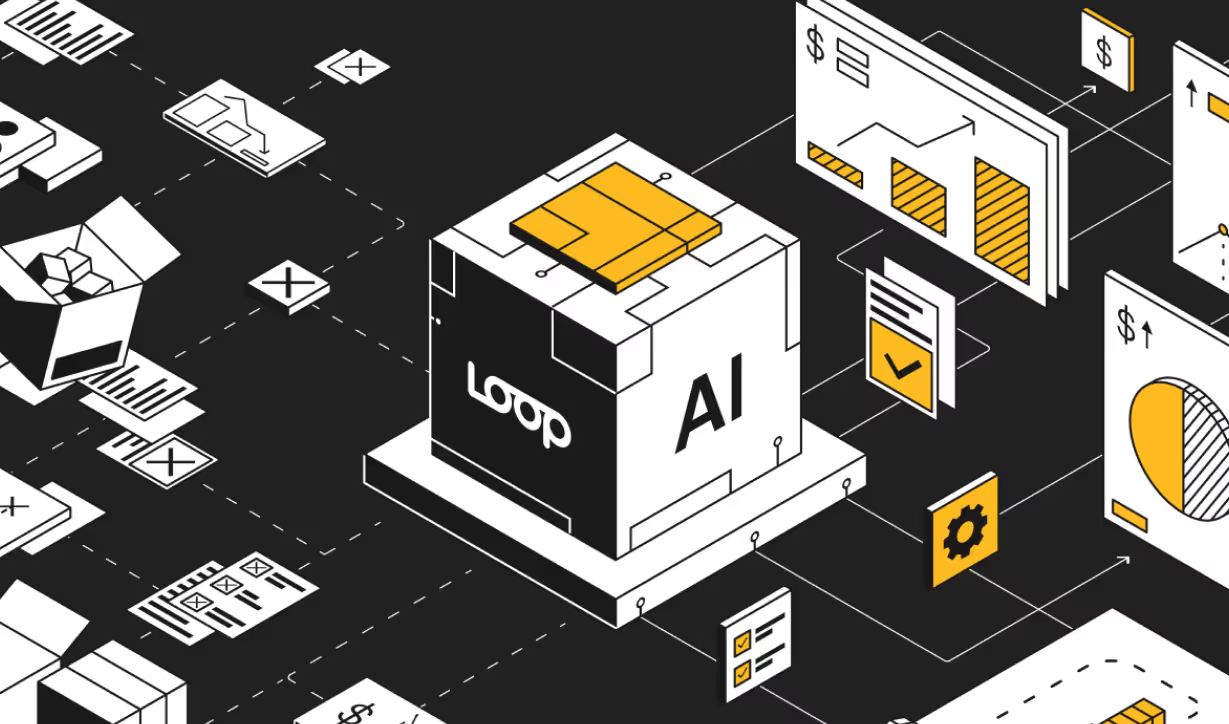
DUX 2.0 is the engine behind Loop's Logistics Data Platform. It transforms fragmented, unstructured logistics data from any source into a clean, normalized, and connected data foundation, the single source of truth that powers every automation and intelligence capability downstream.

Step 1: Document ingestion
Connect the Loop platform to a wide range of transportation documents in any format, from a multi-page freight invoice PDF to a scanned bill of lading with handwritten notes.

Step 2: Document classification
Our AI classifies what each document is—an invoice, a contract, a customs form—ensuring it’s routed to the correct models for context-aware processing.

Step 3: Data extraction and validation
DUX 2.0 combines extraction, normalization, and validation into one seamless process. When issues are found, a correction agent resolves them in real time, improving accuracy with every document processed.

Step 4: Cross-document linking
Loop AI models along with custom AI agents get to work, normalizing addresses, classifying charges, and linking every related document to create a complete, trustworthy data foundation across your entire logistics network.
The supply chain suffers from a fundamental data problem
For too long, the supply chain has run on a foundation of messy, disconnected data. Critical information is locked away in a chaotic mix of EDI feeds, PDF invoices, bills of lading, purchase orders, customs filings, and spreadsheets that were never designed to talk to each other.
Legacy systems and standard OCR technologies fail to capture the full picture, leading to manual data entry, costly errors, and an endless cycle of exceptions. This forces your team to spend 90%+ of their time cleaning data instead of closing books faster, forecasting accurately, and supporting the AI initiatives your business depends on.

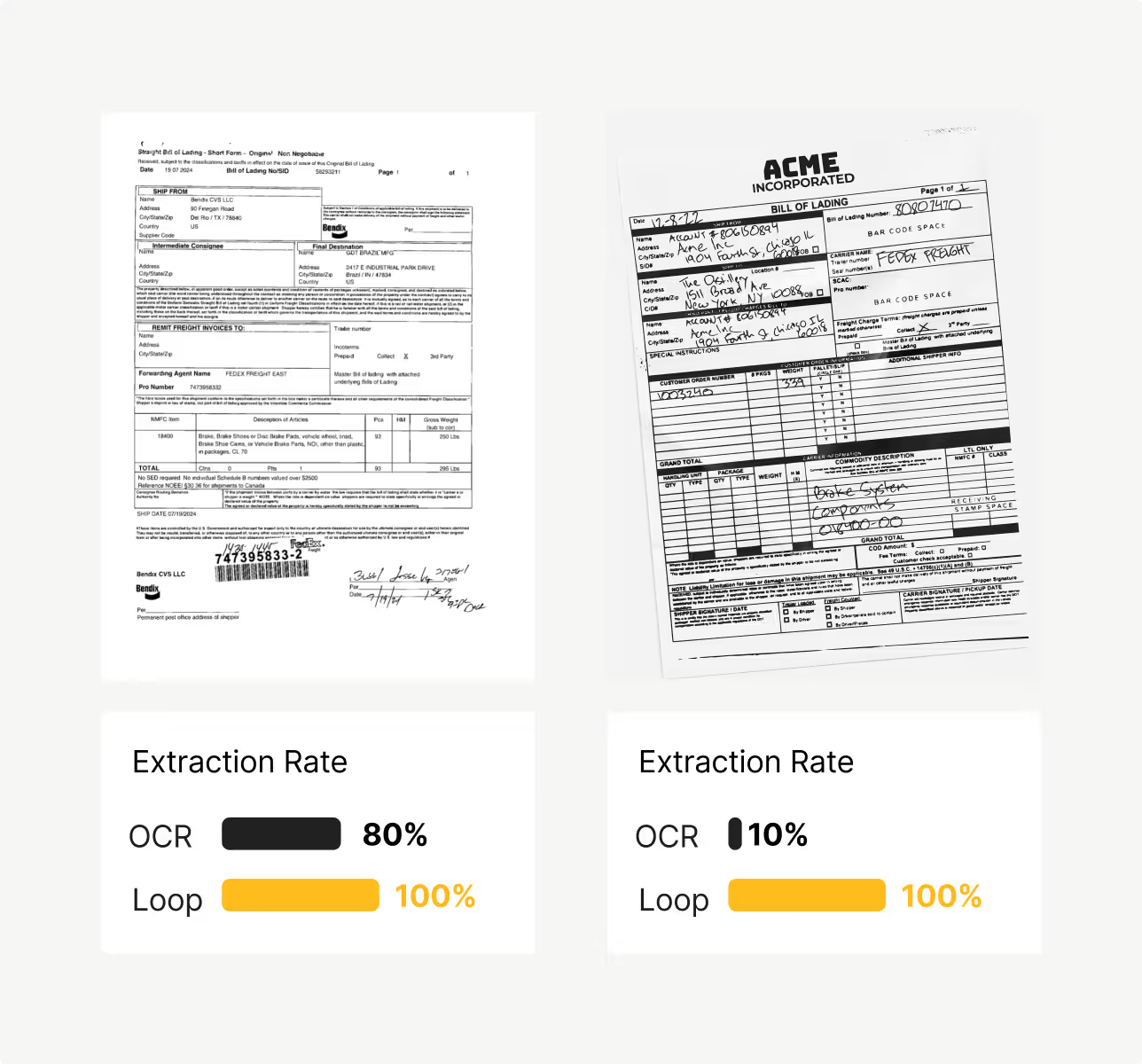
The solution: Full-stack AI built for logistics
DUX 2.0 expands beyond a single extraction model into a full family of logistics-trained AI models and agents. Unlike generic AI tools that are adapted for logistics, DUX 2.0 was architected from the ground up to understand the unique language, layout, and complexity of supply chain data. It accepts any logistics document, regardless of format or structure, and transforms it into clean, linked, business-ready data configured to match your business. The result is a flexible, self-improving data foundation that gets more accurate with every transaction it processes.
DUX 2.0 built with industry-first capabilities
DUX 2.0 achieves unparalleled accuracy by understanding documents like a human expert, seeing the entire picture, not just the text. Unlike other models, DUX processes high-resolution images to read fine print, stamps, and notes standard OCR misses, while treating visual layout as critical information to intelligently interpret complex tables, fields, and handwritten notes.
DUX 2.0 extends this foundation to any logistics document, from purchase orders and customs filings to CSVs, without engineering intervention. Adding a new document type or freight mode takes days, not months.

Not another generic LLM
Generic models can parse text, but they have no concept of logistics domain logic, cross-document relationships, or why pickup date must precede delivery date. DUX 2.0 is freight-native, not freight-adapted.

Human in the loop approach
When we build a new model, we always construct and train it with three humans involved so we can validate its performance.

Multi-model decision making
To arrive at a decision, Loop utilizes multiple models, general-purpose models and fine-tuning models to ensure there is consensus.

Customer-defined fields
You define exactly which fields to extract and how to normalize them. DUX 2.0 adapts to your business rather than forcing your data into a fixed structure.

Computer visions models
Our models that take in image inputs and convert them to text outputs.

Large language learning models
Our homegrown models that take in text inputs to understand their context and meaning to create outcomes.

Categorization agent
AI agents automatically classify and enrich every document, ensuring each record is properly categorized and routed before entering your data foundation.

AI-driven extraction and validation
DUX 2.0 combines extraction, normalization, and validation in one seamless process, with a correction agent resolving issues in real time.
Data standardization
Normalize data from every carrier regardless of how they name their service-levels, detail their line-hauls, or write “fuel surcharge” for “fuel,” “FL Sur”, “FS,” etc.
Frequently asked questions

Unlock profit trapped in your supply chain.
Chat with our team of supply chain and automation experts to get started today.