Good AI doesn't require a clean foundation. It creates one.
A reaction to Gartner’s “Achieving Logistics AI Success: Build the Digital Foundation First.”
,
Jun 1, 2026
.
5 minutes to read
Every CSCO is being asked the same question by their board: where can we get value from AI? It’s a fair question, and a hard one, because the honest answer for most organizations is that finding places to apply AI isn’t the challenge. Getting the data to power it and deliver meaningful outcomes is the real problem.
New research from Gartner®, “Achieving Logistics AI Success: Build the Digital Foundation First,” says without a clean, unified data foundation, AI in logistics underperforms or fails outright. We at Loop have believed this for a long time, and it’s great to see it stated plainly by an independent voice. But there’s an underlying conclusion buried in the research that matters for anyone deciding where to spend an AI budget this year.
AI for logistics needs a strong data foundation
Gartner® central argument is one we’d make ourselves. AI is only as good as the data underneath it, and in logistics that data is uniquely difficult to extract, organize, and normalize. It arrives as PDFs with handwritten asides, inconsistent reference numbers, vendor-specific language, and no common format. It’s fragmented across carriers, modes, and systems that were never designed to talk to each other. When you try to layer AI on top of that, the AI inherits every gap, error, and blind spot in the data.
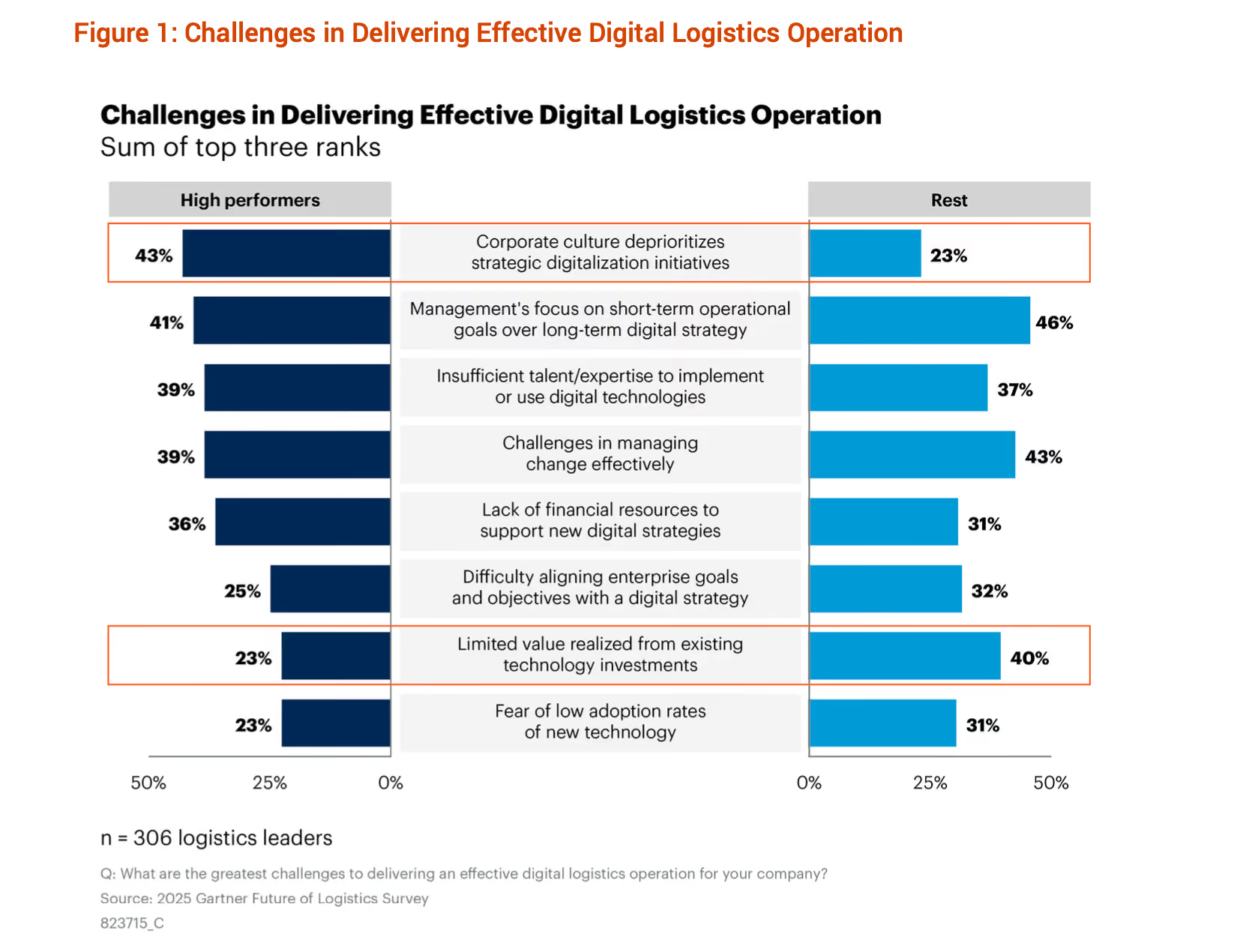
Gartner® cites research that backs this. Excluding top performers, 40% of logistics leaders say they get limited value from the technology they already own. The systems are in place. The investment was made.Yet the value isn’t seen. And the root cause is the data layer underneath it all.
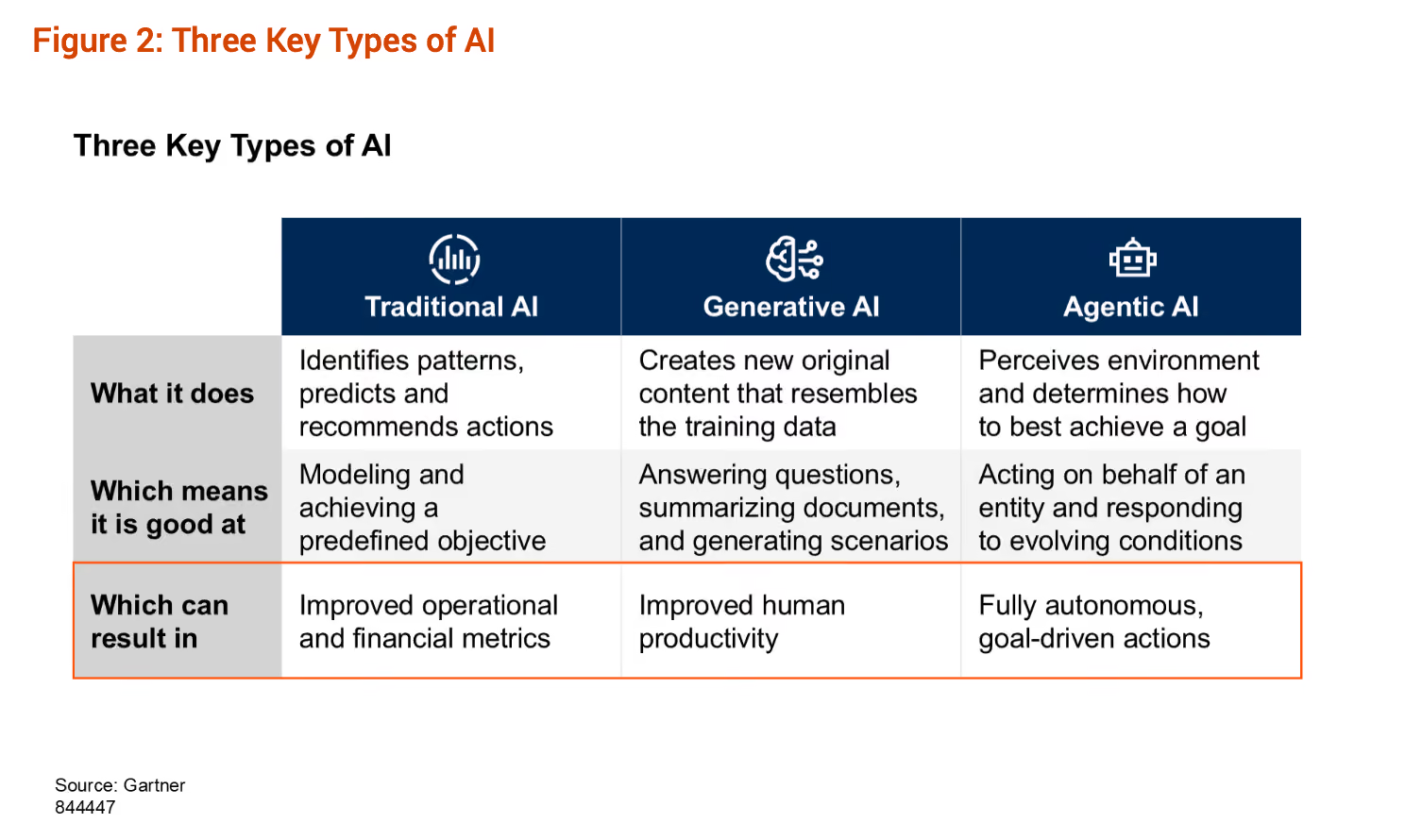
Gartner also draws a clear and useful distinction between three types of AI: traditional, generative, and agentic. Each fits different problems, and leaders should match the type of AI to the best use case rather than buying “AI” as a single undifferentiated thing. Just as you wouldn’t use a hammer to screw in a nail, AI is a tool and there are use cases where certain applications are better than others.
The best partners are designed to deliver AI-ready data today
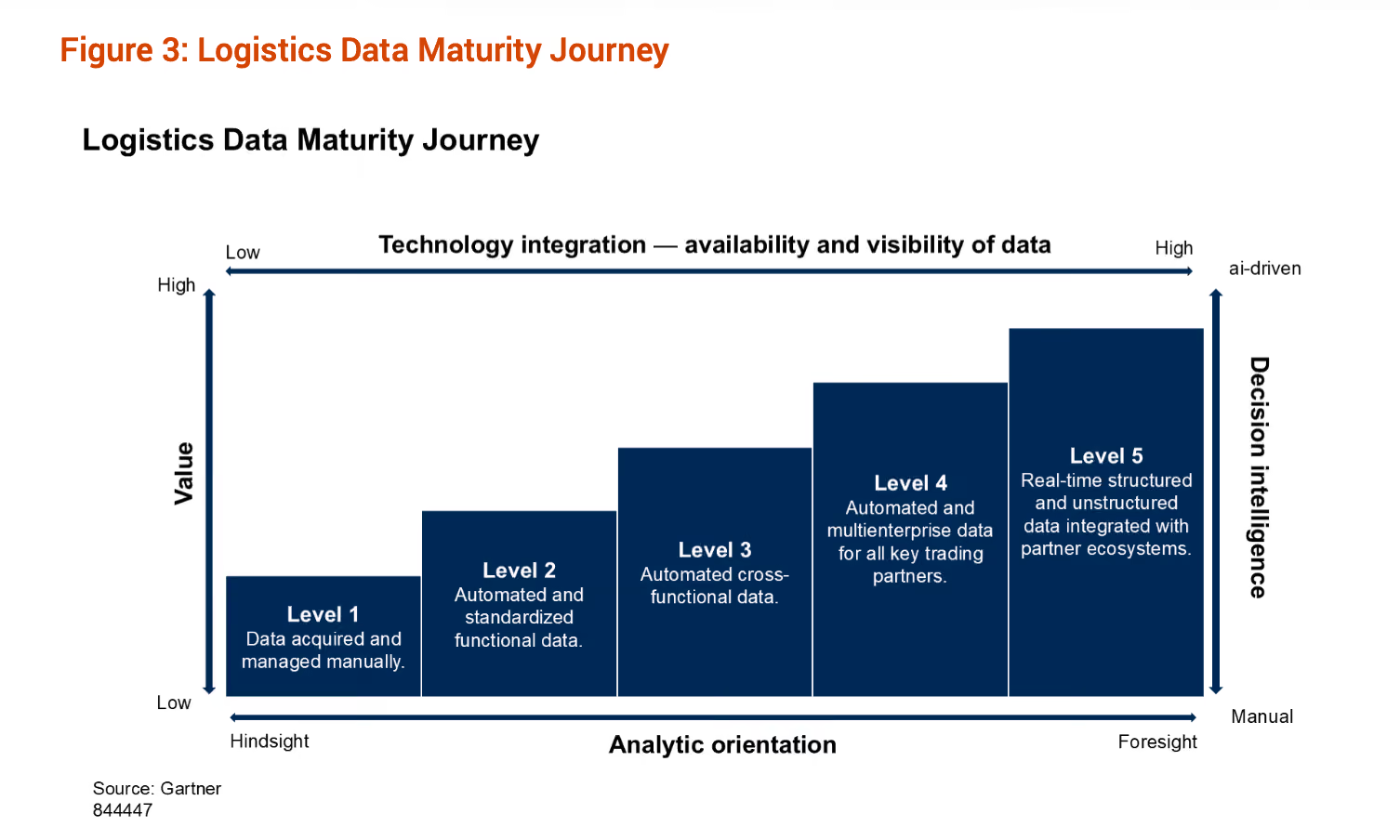
Read one way, we believe the research lands as a sequence. First, audit your foundational systems. Then standardize your data. Then climb the maturity curve. Then, once all of that is in place, you’ve earned the right to apply AI. It’s a logical progression, and for organizations with the time and internal resources to work through it, it’s sound advice.
But for a Chief Supply Chain Officer under pressure to show results this year, that sequence reads as a multi-year detour. The data foundation becomes a prerequisite that stands between you and the thing you’re being asked to deliver.
We see it as a huge opportunity to help. The data foundation everyone treats as a prerequisite is, in our view, the first thing good AI delivers. Cleaning, normalizing, and unifying messy, fragmented logistics data is itself an AI problem, and one of the most valuable ones to solve.
There should be no misconception. We’re not saying you need to rip out your TMS, ERP, or WMS and start over. Those systems aren’t the problem. The problem is that the data flowing to and through them is incomplete, inconsistent, or trapped in unhelpful formats.
When the right AI sits across that flow, and feeds clean, structured information back into your stack, the systems you already own start performing the way you expected when you bought them. Better data means better planning, better reporting, and better decisions. The investment you’ve already made starts returning the value the research says most organizations aren’t getting.
In our opinion, Gartner® frames the destination as a maturity journey that ends in decision intelligence: real-time, structured and unstructured data, integrated across your network, driving foresight rather than hindsight. We’d argue the fastest path to that destination isn’t a years-long internal program to inch up the curve. It’s choosing an AI partner that was built to hand you a great foundation from day one.
Getting the foundation right is the starting line, not the finish
That is the mindset Loop was built on. Loop is a Logistics Data Platform that uses AI built specifically for this domain to turn the messy, fragmented data across your supply chain into a single, trustworthy foundation, without asking you to replace the systems you already run. This includes outbound and inbound freight. Complex air and ocean modes. And related costs from customs, tariffs, and warehousing.
That foundation is also what makes everything after it possible. Once your logistics data is clean, unified, and contextualized, the same platform can automate end-to-end logistics audits, surface actionable intelligence, attribute costs down to the SKU, and run agentic workflows that resolve exceptions and recover dollars with no manual effort.
In our opinion, Gartner® is right that the data foundation is what separates AI that works from AI that disappoints. Where we differ is on whose job it is to build that foundation. It shouldn’t be one more thing on your plate.
It’s the first thing we deliver, and the start of everything else. See how Loop builds the foundation, and what it unlocks with our Logistics Data Platform.
GARTNER is a trademark of Gartner, Inc. and/or its affiliates.
Gartner does not endorse any vendor, product or service depicted in its research publications, and does not advise technology users to select only those vendors with the highest ratings or other designation. Gartner research publications consist of the opinions of Gartner’s research organization and should not be construed as statements of fact. Gartner disclaims all warranties, expressed or implied, with respect to this research, including any warranties of merchantability or fitness for a particular purpose.