For decades, enterprise shippers have been told that the answer to their biggest problems is another portal, another dashboard, another point tool bolted onto a fragmented stack. And for decades, the same problems have come back around. Spend leaks. Carriers fight invoices. Finance closes the books on guesses. Customer care chases shipments through a maze of emails and PDFs. Leaders run global networks looking through a rearview mirror.
The market has been waiting for someone to say the quiet part out loud: none of this gets fixed without solving the underlying data problem first. Today, we're announcing the platform built to do exactly that.
Loop's Logistics Data Platform (LDP) is the first full-stack AI platform built for the entirety of modern logistics. Not a niche tool for auditing freight invoices. Not a lipstick-on-AI overlay for the same legacy systems shippers have been complaining about for twenty years. A platform that unifies the messy reality of logistics data and turns it into the foundation for automation, intelligence, and real business value.
Why now, and why the market needs this
Talk to any CSCO, VP of Supply Chain, or finance leader and you'll hear the same thing in different words. Their teams are buried in manual work. Their data lives in fifteen places. Their AI pilots stall because the underlying data is too messy to trust. Inbound costs are missed or incorrectly classified. And nobody can give them a clean answer to a key question: "what does it actually cost us to serve this customer?"
The freight audit and pay (FAP) category was built for a specific job: catch billing errors, pay carriers, move on. That job still matters. But it was never going to be enough. Shippers don't want a faster invoice processor. They want a system that brings their entire logistics operation into focus and helps them run it better.
What they actually need looks much bigger. They need total cost visibility—freight, accessorials, inbound, duties, and surcharges rolled up to a true landed cost per shipment. They need exceptions handled autonomously: AI agents that catch the discrepancy, open the dispute, and close it out without burning a person's afternoon. They need data that heals itself, continuously validated and normalized so finance can trust it and AI initiatives can actually run on it. They need to enforce policy across every location, team, and vendor instead of hoping the rules hold. And they need duties, tariffs, and customs folded into the same cost picture, so sourcing and routing decisions can flex with trade volatility instead of getting blindsided by it.
That's the gap LDP fills. And it's why we believe this is one of the largest software opportunities in the supply chain today.
Three key pillars to the Logistics Data Platform
A true logistics data platform is built on three core pillars. Three pillars that feed into each other, demonstrating how value compounds when you fix the foundation first.
It starts with best-in-class data. Clean data is the unlock for everything else. Without it, automation produces slop, and intelligence produces debate.
Clean data unlocks frictionless operations. Once the data is trustworthy, AI and agents can take over the tedious, expensive, error-prone work that consumes logistics teams today. Automation gives time back.
Time back unlocks decision intelligence. With operations running themselves and capacity freed up, teams can finally do the work that drives business value: optimizing networks, freeing capital, and turning logistics into a competitive advantage instead of a cost center.
Each pillar feeds the next. Skip one and the rest fall apart. Get all three working together and the picture changes completely.
Pillar one: Best-in-class data powered by DUX™ 2.0
The data foundation is where everything begins, and it's where we're making the boldest move. Meet DUX™ 2.0, the next generation of our DUX intelligence engine built on logistics-trained models and agents.
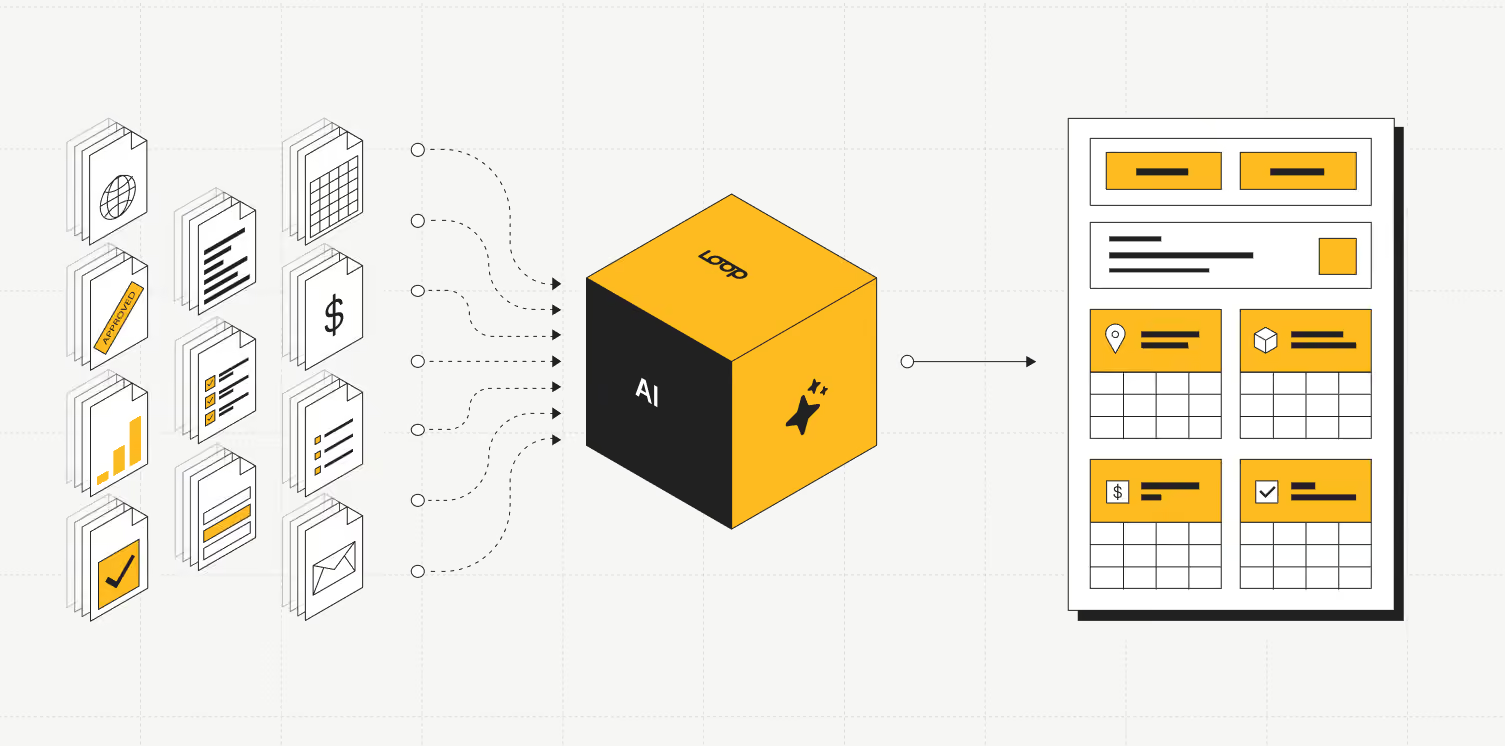
The original DUX taught the industry that AI could finally tame messy transportation documents. DUX 2.0 takes that idea and blows the doors off it. It's an AI-powered ingestion and normalization engine that accepts any logistics document—structured or not, standard or bespoke—and transforms it into clean, linked, business-ready data that conforms to the customer's own schema.
That last part matters. Loop does not impose a fixed data model on your business. You define the fields, the rules, the relationships you actually need. DUX 2.0 handles the extraction, normalization, validation, and linking across documents. Purchase orders connect to shipments. Shipments connect to invoices. Invoices connect to audits. The data finally talks to itself.
What used to take weeks of engineering for a new freight mode or document type now takes days. What used to live trapped in PDFs and inboxes now flows into a single, usable source of truth. And because it's freight-native rather than freight-adapted, every output is validated against a domain model that generic extraction tools simply don't understand.
Pillar two: Frictionless operations led by the Exception Agent
Clean data isn't useful if your team is still drowning in manual work. The second pillar of LDP is about turning that data into action through AI and automation that actually moves the needle.
Our hero release here is our new Exception Agent. Vendor inquiries and exception management is a labor-intensive and time-consuming workflow. Disputes pile up. Carriers wait. Cycles drag. Money gets left on the table because no human team can chase every exception to true resolution.
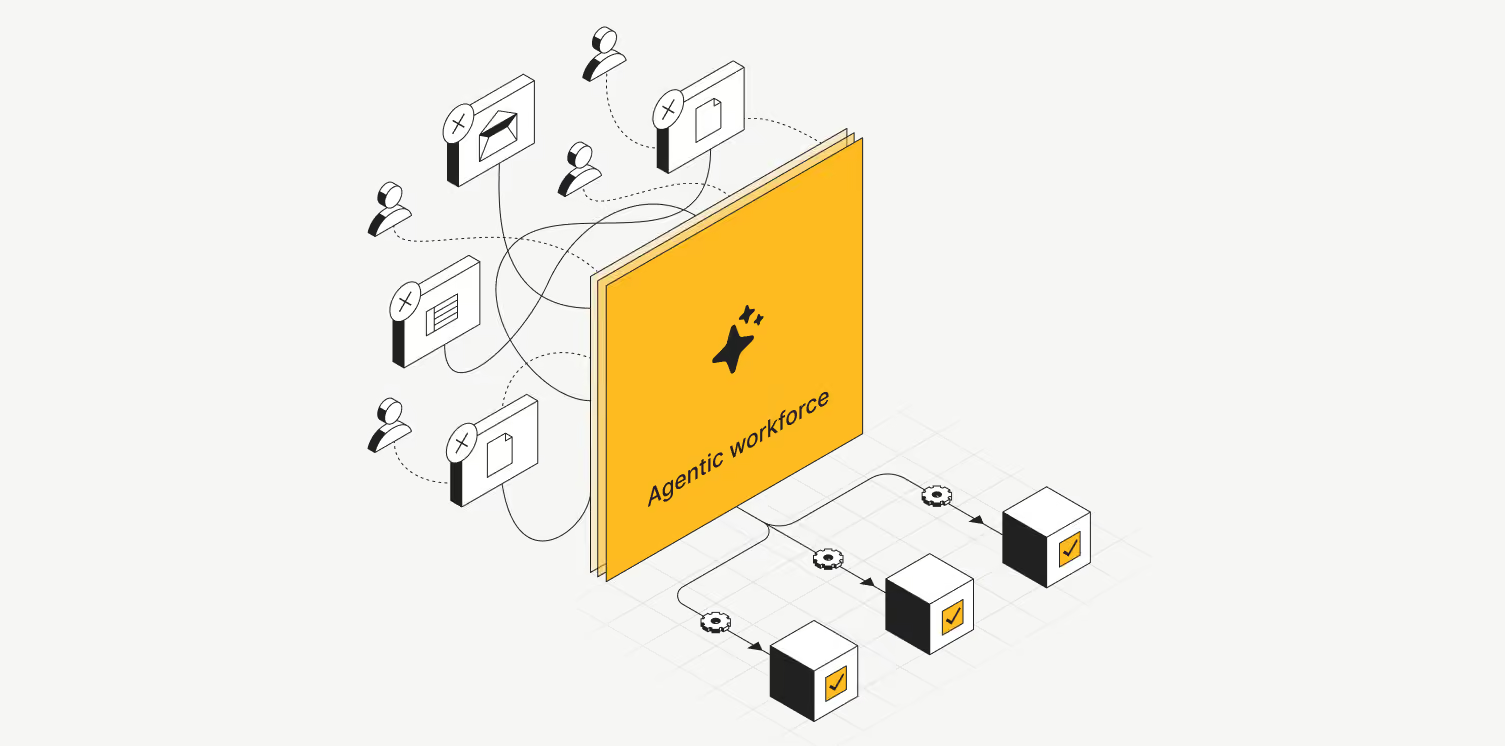
The Exception Agent does what no human team can. It works in the channel carriers already live in—email—autonomously sending dispute notifications, fielding carrier inquiries, retrieving supporting documentation, and driving disputes to resolution in minutes instead of weeks. It enforces your policies at full scale without rubber-stamping anything. And because it's built on Loop's clean data foundation, it can pull the exact invoice records, rate audits, and shipment details needed to make the right call every time. Normalized, clean, and comprehensive shipment data is readily available for the first time.
Around the agent, we're rolling out a broader set of operational upgrades and additional agents: vendor onboarding agent, global audit expansion, PO validation, GL coding policies, and CSV file integration. Together, they give shippers the speed, accuracy, and consistency that "process excellence" has always promised but rarely delivered.
Pillar three: Decision intelligence with Loop Intelligence
Once data is trusted and operations are humming, teams finally get the one thing they've never had enough of: time to think.
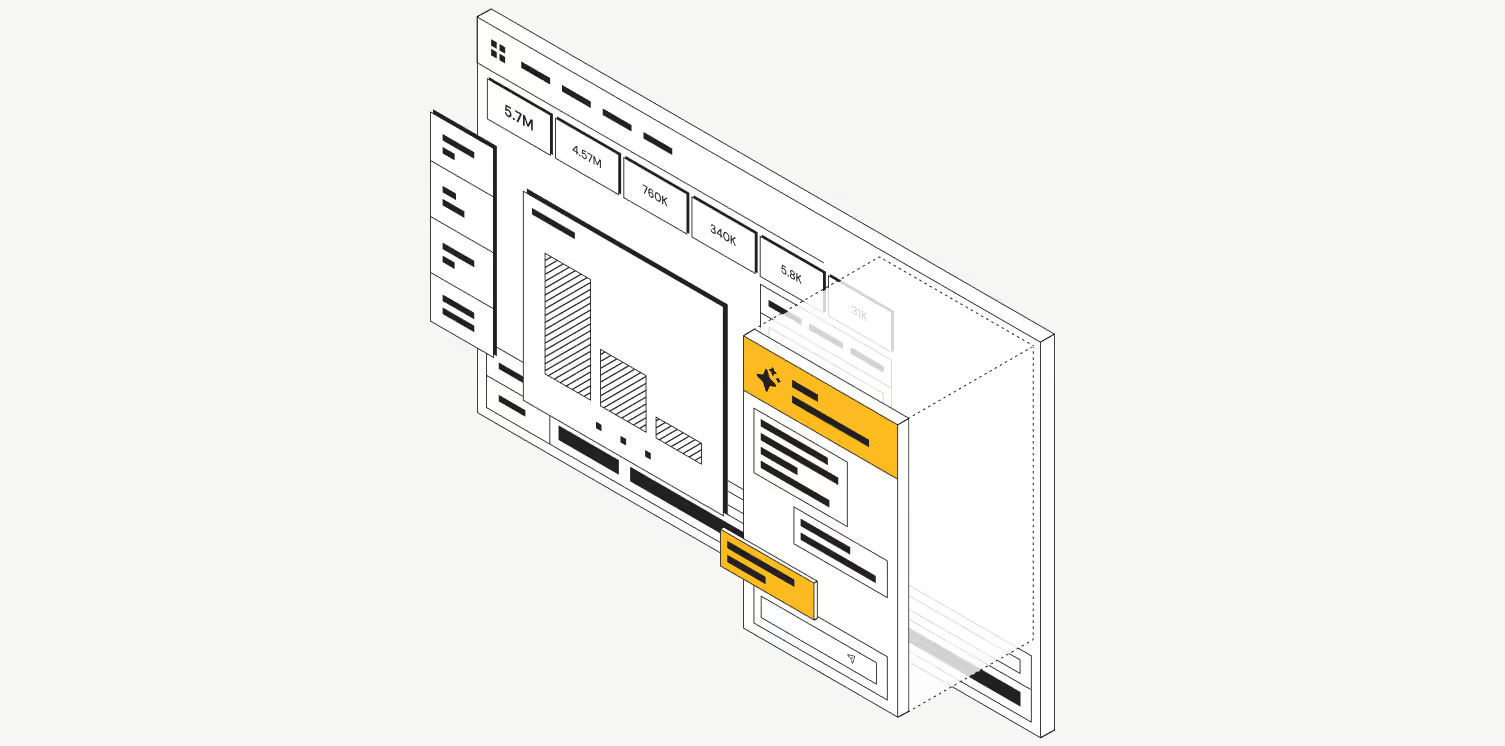
Loop Intelligence is our new analytics and reporting layer, built natively into the platform. No more IT tickets. No more stale extracts. No more debating whose spreadsheet has the right number. Loop Intelligence queries live data directly from the warehouse, gives finance and operations teams a spreadsheet-like interface they already know how to use, and lets anyone ask their data a question in plain English through the new Intelligence AI Assistant.
This is where the story gets exciting for the C-suite. Finance teams can close books on actuals, not estimates. Procurement can model carrier shifts in minutes. Operations leaders can spot underperforming partners before the next quarter slips. Working capital that used to be trapped in cycle-time delays gets freed up. Decisions get made on evidence, not instinct.
And this is just phase one. Loop Intelligence is the foundation for a broader decision intelligence roadmap that will move customers from descriptive reporting toward predictive and prescriptive insights—the "what should I do" questions that turn logistics from a back-office function into a strategic advantage.
The result: Shifting logistics from cost center to value driver
Pull all three pillars together and the shift is fundamental.
Clean data unlocks automation. Automation unlocks time. Time unlocks intelligence. Intelligence unlocks business value.
This is how logistics stops being a place where money gets spent and starts being a place where money gets made. It's how shippers finally get ahead of carrier costs, margin leakage, and supply chain volatility instead of constantly reacting to them. It's how an entire function gets to graduate from "necessary cost" to "competitive lever."
The Logistics Data Platform is the first truly AI-native platform built end-to-end for that future. DUX 2.0, the Exception Agent, and Loop Intelligence are the three specific releases that bring it to life today. And we're just getting started.
If you've been waiting for the platform that finally treats logistics data like the strategic asset it is, this is your moment. We'd love to show you what's possible.